


 中文
中文

syringe pump can accurately, uniformly, and continuously deliver drugs into the body, strictly control the dosage of drugs, ensure the optimal effective concentration of drugs, adjust the injection speed of drugs reasonably, continuously infuse various urgently needed drugs, and reduce the occurrence of complications. Commonly used for infusion of various vasoactive drugs, antiarrhythmic drugs, electrolyte solutions, anesthetics, pediatric drugs, etc. It is easy to operate, can reduce workload, improve work efficiency, and accurately, safely, and effectively cooperate with doctors in rescuing critically ill patients.
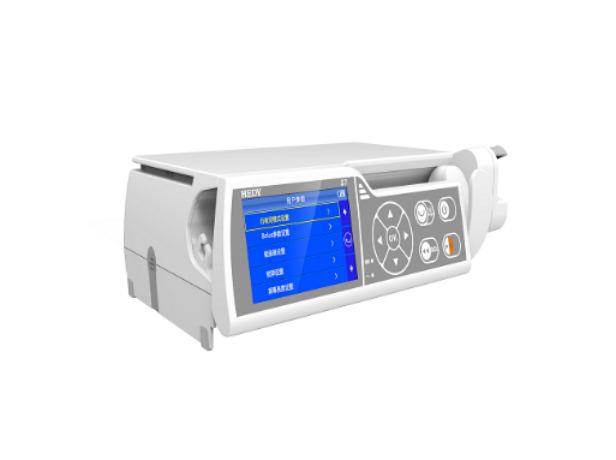
Characteristics of syringe pump
The syringe pump has a complete alarm indication system. Equipped with a battery, it can be self charged by connecting to AC power, and can be continuously used for 3 hours after 15 hours of charging. It can automatically switch to battery power supply in case of AC power interruption, without interrupting medication due to power outage or patient transfer.
The flow rate can be selected between 0.1 and 99.9ml/h. Disposable sterile syringes of 20ml, 30ml, 50ml and other specifications can be selected according to the amount of medication. This provides a convenient, time-saving, and efficient way for clinical nursing services, with accurate and error free medication dosage.
Operation method of syringe pump
Select a disposable sterile syringe according to the dosage to extract the required dose and concentration of medication. Connect the extension tube, exhaust air, and connect the needle. Attach a medication infusion label to the syringe, indicating the start time, bed number, name, medication name, concentration, dosage, and speed. The person who added the medication and the person who added the medication should verify and sign.
Install the micro injection pump in a secure position, loosen the micro pump knob, push the slide, correctly install the syringe and connect it to the venous access (connect the venous indwelling needle by observing whether the needle is unobstructed before connecting). The graduated side of the syringe should face upwards, making it easy to observe the remaining medication and whether the micro pump is in normal working condition.
Connect the power, turn on the switch, and the microinjection pump system will start automatic detection. Set the desired speed, press the START button, and the injection will start automatically. The yellow light is flashing.
When changing the injection speed, press the STOP button to reset the speed, and then press the START button to start injecting the new pump speed. ⑤ Press the STOP button at the end of the injection, turn off the switch, remove the syringe, wipe the micro pump clean, and set it aside.
Handling of common syringe pump alarms
When the drug solution is 2ml, the syringe pump will automatically sound an alarm and the red light will flash. You can press the alarm button to stop the red light flashing, allowing the remaining drug solution in the syringe to be pumped in at a constant speed, avoiding waste of drug solution, ensuring sufficient supply of drug, and ensuring effective blood drug concentration. At this point, another syringe of medication can be prepared.
2. Complete blockage of the microinjection pump pathway, such as pump tube folding or needle blockage. When the needle is blocked, it needs to be punctured again. Due to the elasticity and large capacity of the extension tube, patients are prone to needle blockage when agitated, suctioning phlegm, or coughing. Even after blockage, the micro pump continues to deliver the medication, but the medication does not enter the blood vessels and accumulates inside the extension tube. When the pressure of the extension tube increases to a certain limit, the micro pump will sound an alarm, which is unfavorable for critically ill patients.
3. When the battery energy is exhausted, the external power supply should be immediately connected to continue working.
4. If the power plug is loose, the power should be connected immediately.
5. If the syringe becomes loose due to accidental collision, it should be checked whether the syringe is in its normal position.
6. Drug leakage: If there is leakage during the injection process, the alarm system of the micro pump will not reflect it. Only when the leakage reaches a certain level and generates a certain resistance will an alarm occur. When using a microinjection pump, it is necessary to strengthen inspections, and when an alarm occurs, the cause of the alarm should be checked, and different reasons should be dealt with in a timely manner.
Other precautions for syringe pump
When using a syringe pump, it is advisable to establish a separate venous access. When multiple drugs are used in combination, it is easy to violate compatibility taboos between drugs, resulting in reduced drug efficacy and even toxic side effects.
Do not insert 2-3 channels into the heparin cap of the same vein catheter to avoid being affected by infusion speed, pressure, or other operations such as medication pushing, which may cause the drug concentration to fluctuate and affect the blood drug concentration, leading to changes in the condition, delayed treatment, and adverse reactions.
After injection, strict aseptic operation is required. The syringe and pump tube should be replaced after 24 hours of use. If there is contamination, they should be replaced in a timely manner. When there is a significant change in blood pressure and heart rate without obvious reasons, it is necessary to observe whether the connecting tube and blood vessels of the infusion pump are unobstructed. The extension tube of the micro pump should be disconnected from the positive pressure joint to observe whether the connecting tube and blood vessels are unobstructed. Do not fold the extension tube and squeeze it into the blood vessels, especially when using sodium nitroprusside, to avoid causing a sudden drop in the patient's blood pressure.
Properly handle venous return blood
When using a syringe pump, it should be placed higher than the injection site to reduce blood reflux. When venous reflux is detected, different measures should be taken according to the nature of the medication used and the amount of reflux:
For drugs that do not have strict requirements for administration speed and have very little blood return, you can directly press FAST.
Dopamine, aminophylline and other drugs cannot simply press the fast forward (FAST) button to process the return of blood. A needle tube containing physiological saline should be attached to the needle and the return of blood should be slowly pushed in.
If there is a large amount of blood returning to the extension tube, the pump tube needs to be replaced. Do not directly push the needle onto the pump tube, as it may cause adverse consequences due to rapid administration.
Avoid the risk of fatal harm to patients caused by blood withdrawal or rapid injection of large amounts of medication.